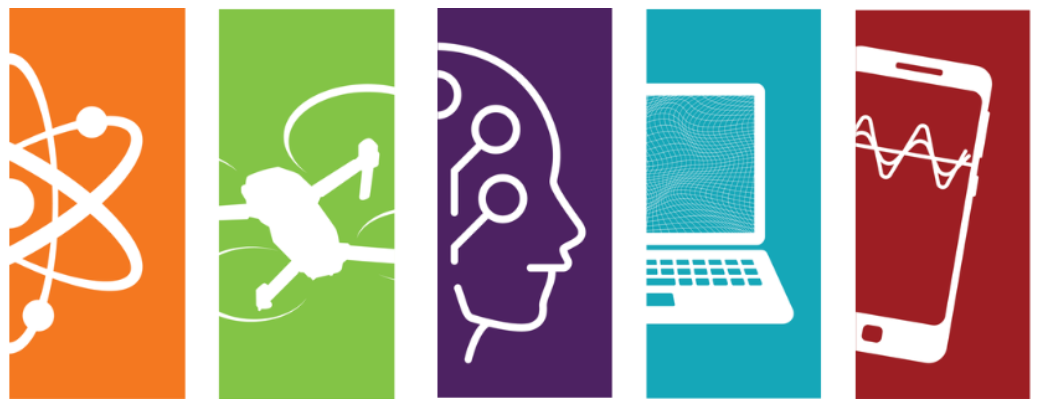
Understanding Energy Technology: This session provides an immersive experience into cutting-edge energy technologies and their practical applications, guided by the scientists at the forefront of this research. Hands-on activities, lesson plans, and interactive demonstrations will be provided to effectively teach topics such as energy storage, transport, renewable energy, and future sustainable power solutions.
June 15-16, 2026 | 8:30 am - 4:30 pm
Drone Design & Application: Explore drone development for engineering, science, and computer science classes. This hands-on session covers drone design, programming, and real-world applications, while providing practical tools and lesson plans to integrate drones into your curriculum. Inspire students with STEM concepts like coding and aerodynamics. Transform your classroom into a hub of innovation!
June 18-19, 2026 | 8:30 am – 4:30 pm
Super Intelligence (SI) or the Classroom: This session is designed to help STEM educators become more knowledgeable about super intelligence (SI). The session will provide opportunities to learn about the underlying principles of SI, how LLNL researchers are applying SI to complex problems, as well as how SI is poised to impact many different fields in the future. A significant portion of the workshop will be dedicated to becoming familiar with existing generative SI tools and building confidence in applying different tools to a range of tasks such as improving subject matter knowledge, creating content for lessons, designing assessments, and assistance with communications. The workshop will target educators who have limited or no experience using SI tools but is open to all that want to engage in learning more on this rapidly evolving technology.
June 22-23, 2026 | 8:30 am – 4:30 pm
Data Analytics for STEM Labs using SI: In this workshop, participants will conduct a series of simple experiments and use natural language prompts with SI tools to perform computational analysis on their data. Applications will include analyzing biological data relevant to life sciences, interpreting physical measurements for physics and chemistry, and solving engineering problems such as signal processing and system modeling. Participants will conduct statistical analysis of large data sets, perform coordinate transformations on GPS data, fit periodic data to simple harmonic oscillator models, transform time-domain measurements to the frequency domain, and tackle other complex data analysis tasks that have historically required programming skills.
June 25-26, 2026 | 8:30 am – 4:30 pm