


Abstract:
Are video games a waste of time? Your parents might say yes, but many scientists would strongly disagree. The same technology that makes games so fast and fun is now helping solve some of the hardest problems in science. The key is the Graphics Processing Unit, or GPU. This special chip is built to handle huge numbers of calculations at the same time, which is perfect for drawing game graphics in fractions of a second. Because GPUs can do many tasks in parallel, they are now taking over from traditional computer processors for most heavy number crunching. They can do more work, much faster, while using less energy. Someday, quantum computers might be even more powerful, but until then, GPUs are leading the way. They are not just for video games anymore, they are driving progress in artificial intelligence, Earth science, and many other fields. In this talk, you will see how GPUs have sped up computer models of the atmosphere by as much as 100 times. These ultra fast simulations are helping scientists and engineers develop new ways to keep people in big cities safe from threats in the air.
Bios:
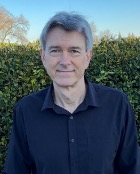
Jeff Mirocha received B. S. and B. A. degrees in Geography and Mathematics from Arizona State University, and M. S. and Ph. D. degrees in Astrophysical, Planetary and Atmospheric Sciences with over 20 years of experience working on a wide range of atmospheric problems, including dispersion, wildfires, and weather. Jeff has taught classes in Atmospheric Science at San Jose State and Stanislaus State Universities.
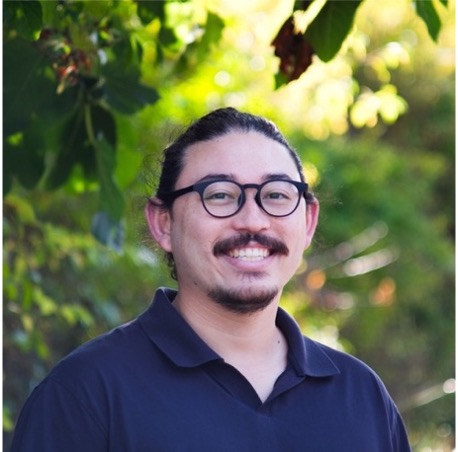
Adam Wise received a B. S. in Mechanical Engineering from Virginia Tech and an M. S. and Ph. D. in Civil and Environmental Engineering from the University of California, Berkeley. He is currently a postdoctoral researcher in the Atmospheric Sciences and Research Applications group at LLNL. His research focuses on turbulence in the atmospheric boundary layer applied to onshore and offshore wind energy, complex terrain, and urban flows.
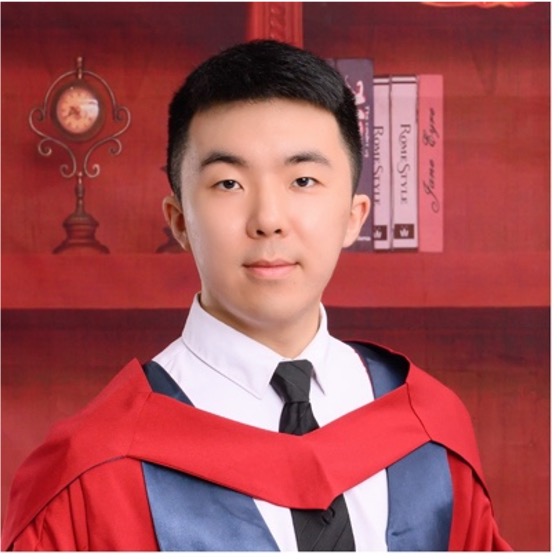
Ruiqing Du received a B. S. and M. Phil. in Building Environment and Energy Engineering from Chongqing University, and a Ph. D. in Urban Climate and Energy from the University of Hong Kong. He is a postdoctoral researcher at LLNL specializing in the development of GPU-accelerated urban atmospheric models. His expertise spans a broad spectrum, ranging from rapid-response parameterization models to high-fidelity physics modules.
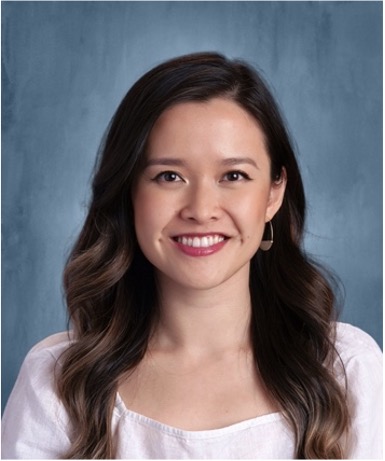
Thi Ngo received a B. A. and M. A. from the University of California, Davis. She is a Life Science teacher from Stockton, CA. Currently, she teaches Biology at Capuchino High School in San Bruno, CA. Thi ia also a Faculty Scholar in the Science Education program at LLNL.