


Abstract:
Have you ever wondered where the material that makes up planets, asteroids, and even our bodies comes from? When stars reach the end of their lives, they create many of the elements around us, including the carbon that makes up life on Earth and the oxygen we breathe. These elements drift through space as gas and dust and eventually help form new stars, new planets, and even you and me. Scientists have actually found tiny pieces of this “stardust” here on Earth, preserved inside meteorites that fall from space. This talk will tell the story of stardust and how LLNL uses powerful tools to learn about the stars that made us.
Bios:
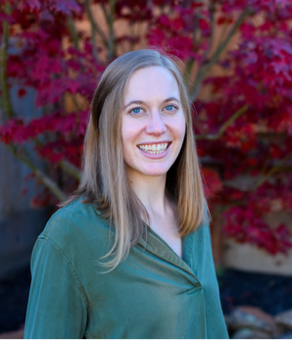
Emilie Dunham received her Ph. D. from Arizona State University. After completing her Ph.D., Dunham ventured on a month-long meteorite hunting expedition in Antarctica as part of Case Western’s Antarctic Search for Meteorites team. She returned to the U.S. as a 51 Pegasi b postdoctoral fellow at the University of California, Los Angeles. Currently, she is a Lawrence Fellow at LLNL where her research focuses on constraining the formation of the Solar System by studying very old meteoritic inclusions with mass spectrometry techniques.
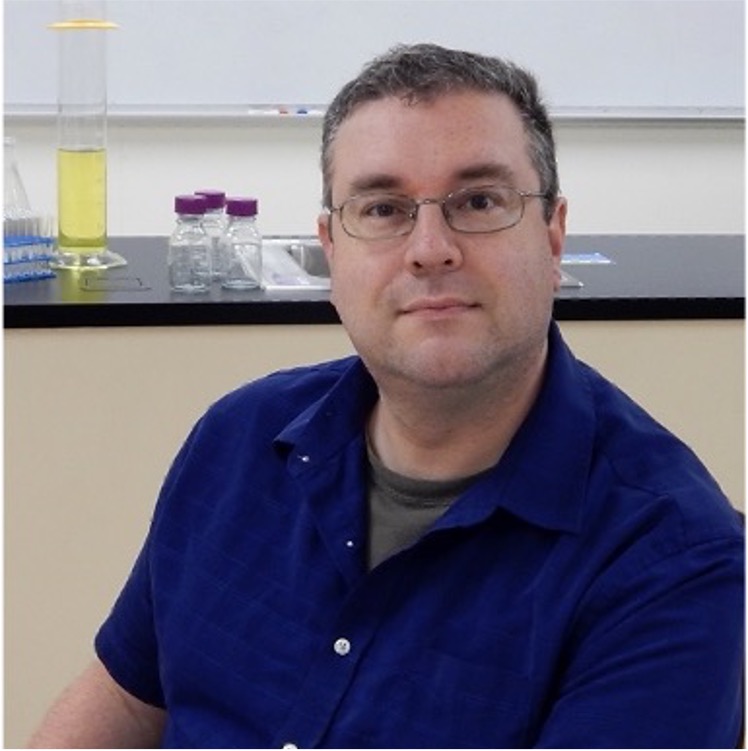
Tom Shefler received a B. S. degree in Physics and Applied Mathematics from Western Michigan University and a M. A. in Astronomy and Astrophysics from the UC Berkeley. While at Berkeley, he researched analyzed and cataloged Hubble Space Telescope images of galaxies, observational research involved in the detection and study of extrasolar planets, and discovered Supernova 1998DT while working with the Katzman Automatic Imaging Telescope team. He currently teaches Physics and Engineering at Granada High School.