


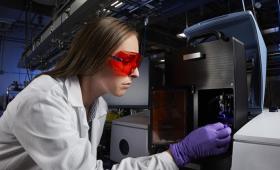
Researchers have demonstrated the ability to 3D-print microscopic objects in silica glass, part of an effort to produce delicate, layer-less optics that can be built in seconds or minutes.
Science and Technology
in the News
Science and Technology
in the News
News Center
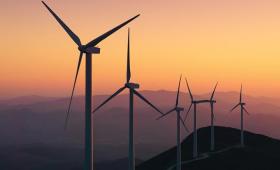
A Livermore climate scientist and collaborators developed a novel approach to more quickly see the temperature response to strong emissions reductions.
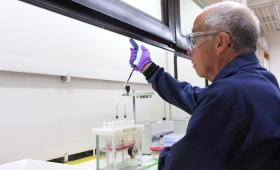
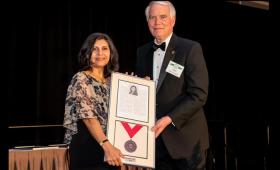
LLNL researchers recently learned that they had received an “A” grade for the 12th consecutive year in October’s 50th Organisation for the Prohibition of Chemical Weapons proficiency test.
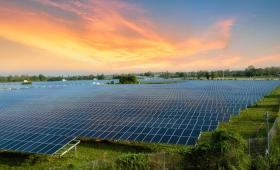
In 2021, Americans used 5% more energy than in 2020, according to the most recent energy flow charts released by the Laboratory.

The second edition of Microbial Systems Biology: Methods and Protocols includes chapters produced by Livermore researchers.
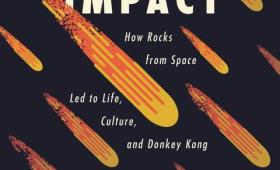
General audience book by Livermore's Greg Brennecka argues that Earth would be a lifeless, inhospitable piece of rock without being fortuitously assaulted with meteorites throughout the history of the planet.
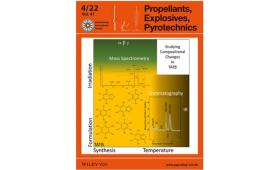
Livermore researchers developed and demonstrated a technique for detecting, identifying, and quantifying the minor components found in the insensitive high explosive TATB.
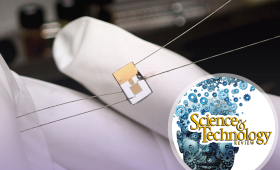
Livermore’s innovative 3D battery designs increase power density and longevity for remote applications.
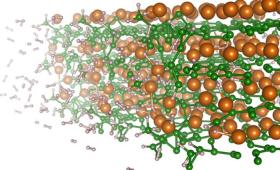
Livermore scientists have simulated the hydrogen storage reactions in a promising material and discovered why hydrogen uptake slows as the material absorbs hydrogen.