


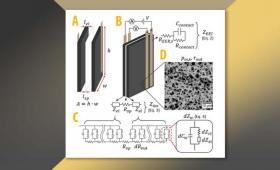
LLNL scientists have provided a comprehensive practical overview of a capacitive deionization cell's resistive components both experimentally and theoretically.
Science and Technology
in the News
Science and Technology
in the News
News Center
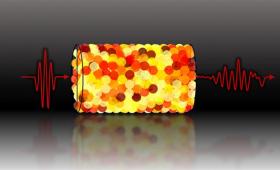
Researchers find principles underlying velocity scaling and dispersion in wave transmission through grainy particle arrangements.
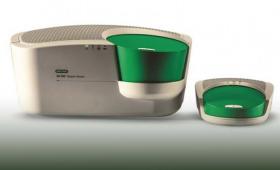
Livermore's technology transfer team has opened up multiple fronts to aid the nation’s efforts against the SARS-CoV-2 virus that causes COVID-19.
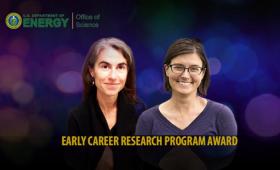
Two Livermore scientists, Federica Coppari and Erin Nuccio, are recipients of the Department of Energy’s Office of Science Early Career Research Program award.
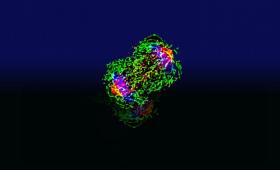
Biologists from Livermore have found another mechanism that affects the maintenance and expansion of malignant breast cancer cells: electric signals in the tumor microenvironment.
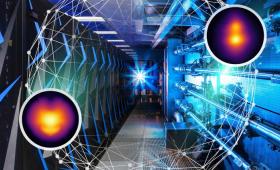
Livermore scientists report that surrogate models supported by neural networks can perform as well, and in some ways better, than computationally expensive simulators.

A team of researchers including scientists from Livermore details the first quantitative measurements of the magnetic field structure of plasma filamentation.
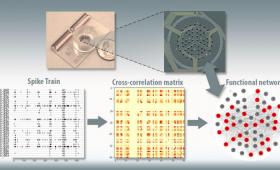
LLNL researchers have developed a way to computationally model the activity and structures of neuronal communities as they grow and mature on the device over time.
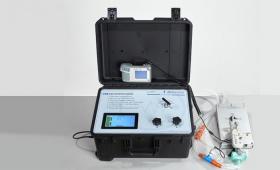
Following weeks of prototyping, Livermore is partnering with private industry to mass-produce a simple mechanical ventilator developed for COVID-19 patients that has been authorized for emergency use by the U.S. Food and Drug Administration.
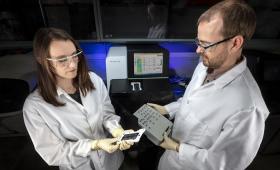
Livermore researchers are working with other Department of Energy national labs on technologies to improve the speed and accuracy of tests for COVID-19.