


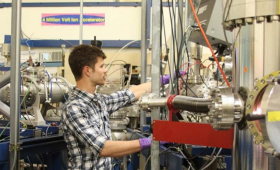
Livermore and Texas A&M scientists gain a better understanding of how radiation defects form
Science and Technology Highlights

A new calculation of nucleon axial coupling offers insights into the properties of neutrons.

Livermore researchers are collaborating with the U.S. Navy on 3D-printing critical replacement parts.
An international research team has developed an x-ray-based method to study individual amyloid fibrils
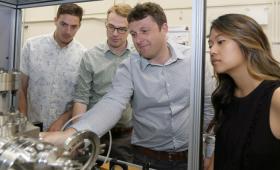
A Livermore team has designed and built a portable diagnostic machine capable of probing the melt pool in additive manufacturing processes to improve part quality.
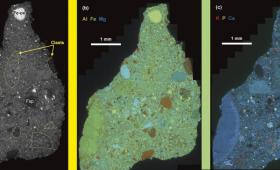
Scientists have determined how and when the red planet’s crustal topographic and geophysical divide formed by examining an ancient Martian meteorite.
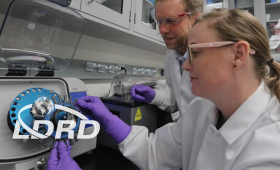
A Livermore-led scientific team has developed a science-based, statistically validated way to use protein markers from human bones for identification
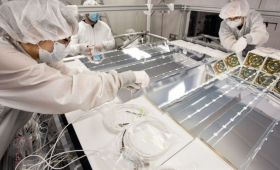
he Precision Reactor Oscillation and Spectrum Experiment will probe the possible existence of a new form of matter—sterile neutrinos

Livermore researchers and partners have driven water to extreme temperatures to study its behavior at extreme conditions.

Experiments at the National Ignition Facility are providing scientists with new insights into the turbulent after-effects of a supernova explosion.